
Key Takeaways
- A can seamer closes a can by mechanically interlocking the flange of the can body with the curl of the can end. The can and end are held together against a seaming chuck while two purpose-sh…
- The process is fast, but a reliable result depends on the entire closure system: compatible cans and ends, correct tooling, stable lifting and centering, accurate end placement, clean contac…
- For defect-specific checks, see double seam inspection for beverage cans. If inspection shows the machine needs correction, follow the controlled can seamer adjustment and troubleshooting gu…
Quick Answer
A can seamer closes a can by mechanically interlocking the flange of the can body with the curl of the can end. The can and end are held together against a seaming chuck while two purpose-shaped rolls complete the joint. The first-operation roll folds the end curl under the body flange to establish the hooks and initial interlock. The second-operation roll then compresses and finishes those layers to create the specified double-seam geometry. When a seam is out of specification, double seam inspection should determine whether the defect relates to components, handling, first-operation formation, or second-operation finishing before an authorized adjustment is made.
The process is fast, but a reliable result depends on the entire closure system: compatible cans and ends, correct tooling, stable lifting and centering, accurate end placement, clean contact surfaces, controlled first- and second-operation settings, and inspection against an approved specification. There is no universal seam dimension or machine setting that is correct for every can. Production targets must come from the applicable can, end, tooling, and seamer documentation.
For defect-specific checks, see double seam inspection for beverage cans. If inspection shows the machine needs correction, follow the controlled can seamer adjustment and troubleshooting guide.
Choosing equipment for a line? Compare standalone seamers with carbonated and still-beverage monoblocks.
What Is a Can Seamer?
A can seamer, also called a double seaming machine, attaches a compatible can end to a can body without relying on a welded joint at the closure. Its job is to form the body flange and end curl into a controlled mechanical interlock called a double seam.
During closing, the machine supports and centers the can, places the end correctly, holds both components against a chuck, and brings first- and second-operation rolls into controlled contact with the rotating closure. The finished seam contains a body hook and a cover, or end, hook. These hooks overlap inside the seam and are compressed into the geometry defined for that exact can-and-end combination.
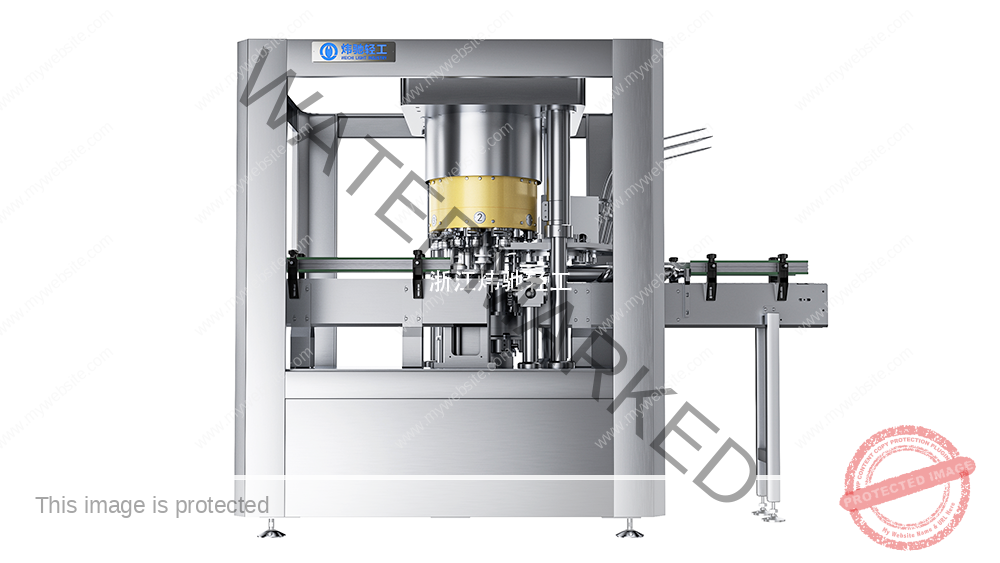
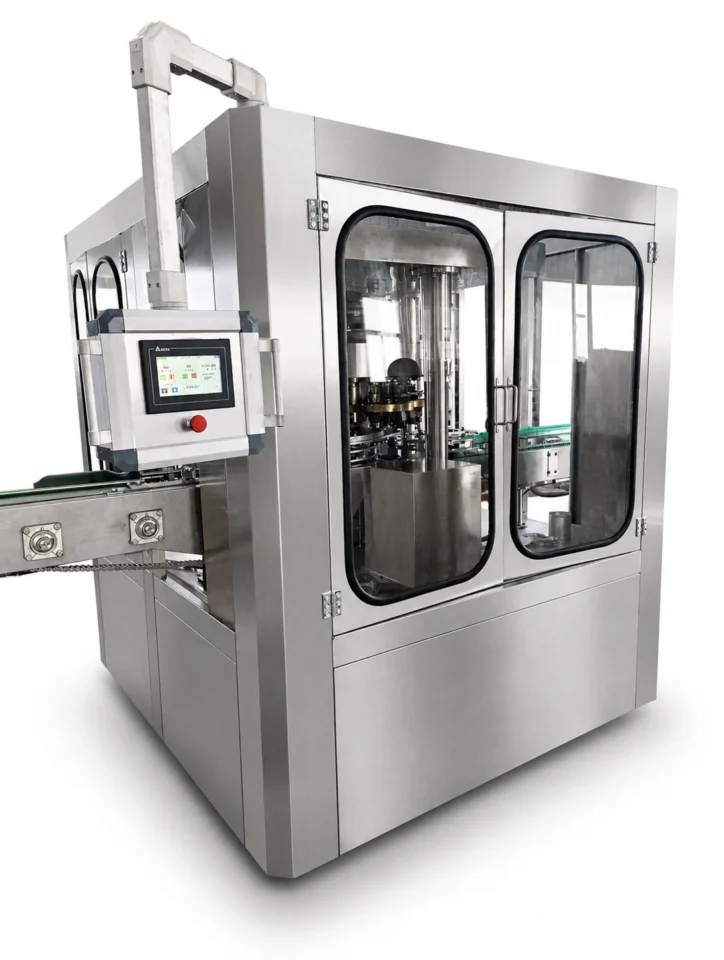
A beverage seamer may operate as a standalone closing machine or as part of an integrated filling and packaging line. The correct configuration depends on the product, fill conditions, container drawings, required output, upstream and downstream interfaces, inspection plan, changeover needs, and site requirements.
Why Double Seam Technology Is Used
Double seaming creates a repeatable mechanical closure from the prepared geometry of the can body and end. Instead of attempting to compress both components into their final shape in one uncontrolled movement, the process separates hook formation from final compression. This lets the metal be folded into an interlock before the joint is tightened and finished.
The end normally carries sealing compound in the designed sealing area. During seaming, that compound is compressed within intended spaces and helps fill appropriate voids. It is important, but it is not a substitute for correct metal formation. Compound cannot repair a false seam, insufficient hook overlap, a damaged flange, incorrect tooling, contamination, or a badly formed first operation.
Closure performance therefore comes from a coordinated system rather than from “tightness” alone. The objective is the approved combination of interlock, overlap, finished geometry, wrinkle condition, compound distribution, and package integrity. Excessive compression can be harmful as well as insufficient compression because it may deform the seam, damage coatings, or contribute to sharp and fractured conditions.
Main Components of a Can Seamer
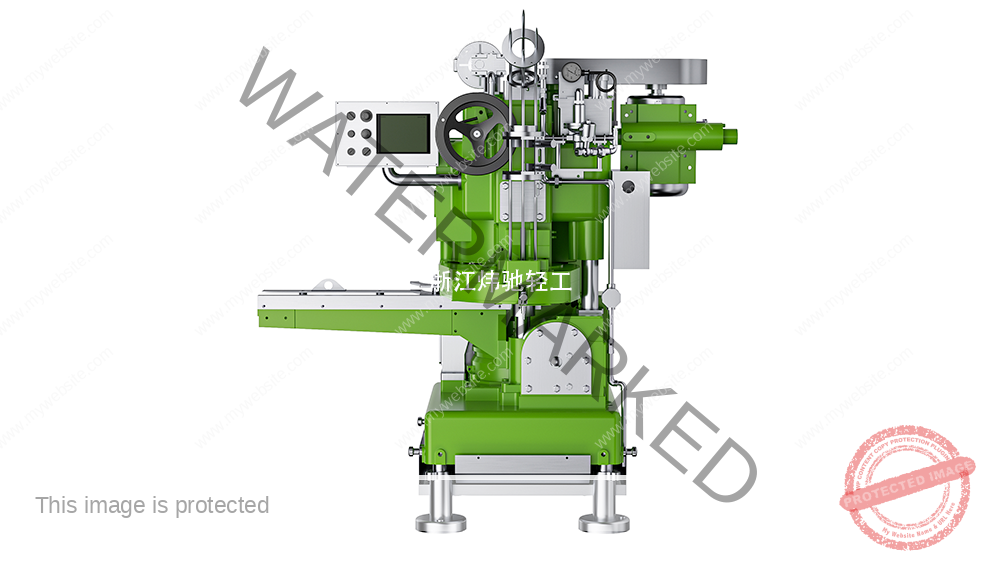
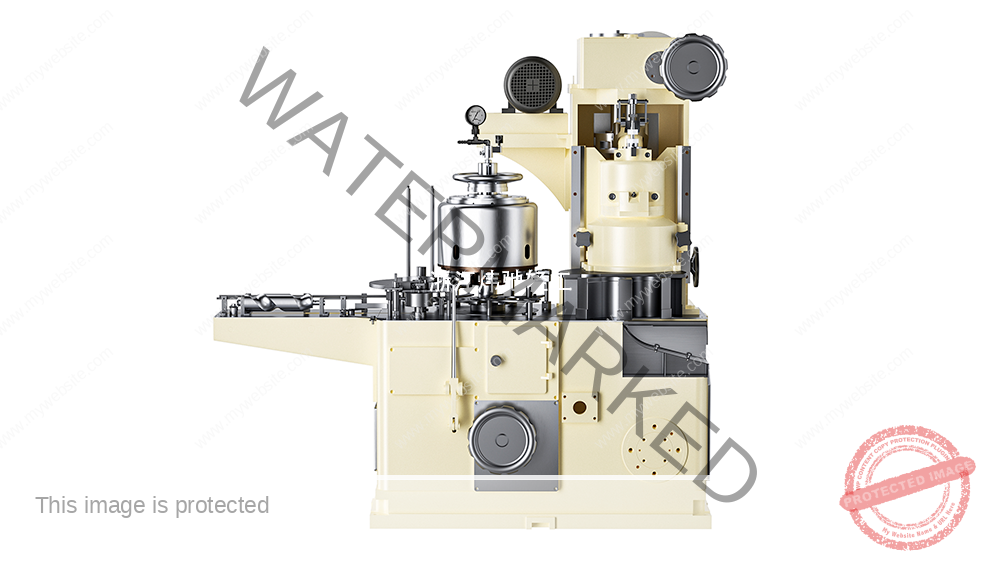
Industrial seamers differ in layout and automation, but the following functional elements are commonly evaluated. Their exact design, materials, controls, and adjustment methods are machine-specific.
| Component | Main function | Important control point |
|---|---|---|
| Can infeed and spacing system | Presents cans to the seaming section in a controlled sequence | Stable transfer without flange damage, impact, or incorrect spacing |
| End feed and placement system | Supplies and positions a compatible can end | Correct end orientation, presence, handling, and alignment |
| Lifter or base plate | Raises and supports the can against the chuck | Correct lift condition, centering, support, and freedom from slippage |
| Seaming chuck | Supports the end profile and provides the working reference for seam formation | Correct profile, condition, fit, cleanliness, and alignment |
| First-operation roll | Folds the end curl under the body flange to form the initial interlock | Correct profile, position, material distribution, and first-operation shape |
| Second-operation roll | Compresses and finishes the previously formed layers | Controlled final geometry without looseness, over-compression, or damage |
| Drive, turret, and roll-actuation system | Coordinates container movement and roll engagement | Timing, bearing condition, repeatability, and head-to-head consistency |
| Discharge, guards, and line interlocks | Transfers closed cans and supports safe line operation | Stable discharge, access control, emergency functions, and interface logic |
Tooling is part of the process specification, not a generic accessory. A chuck or roll that appears physically similar may still have the wrong profile for the selected end. Likewise, a nominal can diameter does not by itself establish compatibility; the body drawing, end drawing, materials, flange and curl geometry, lift condition, and required change parts must be reviewed together.
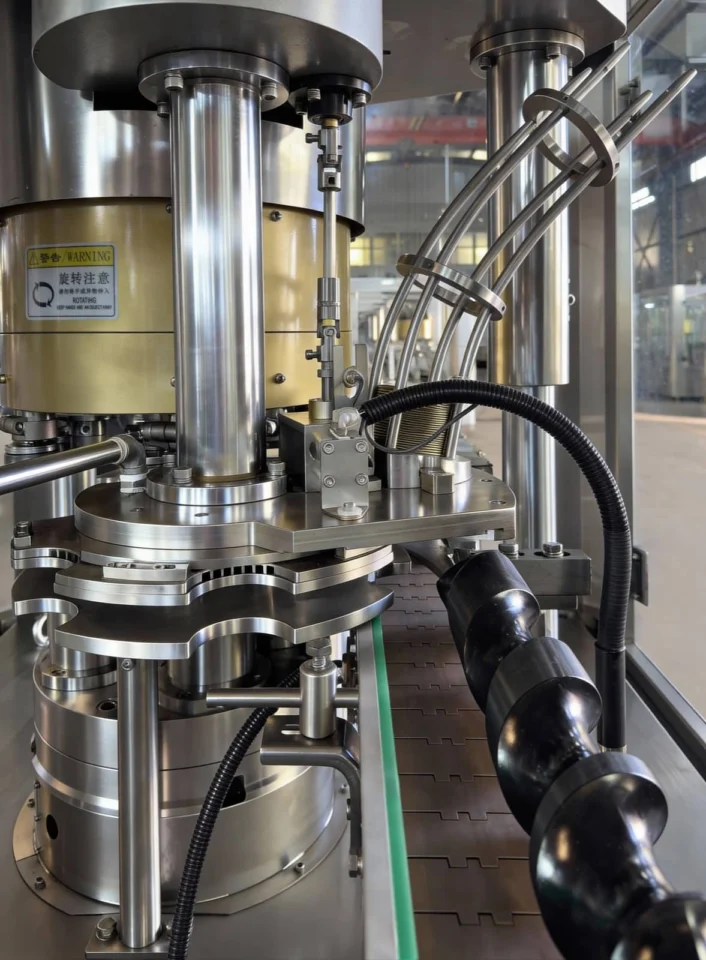
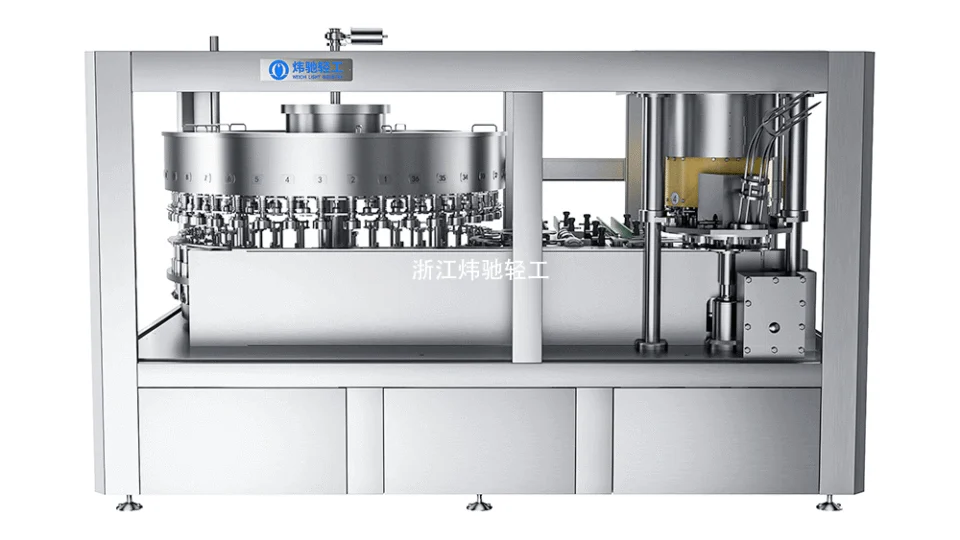
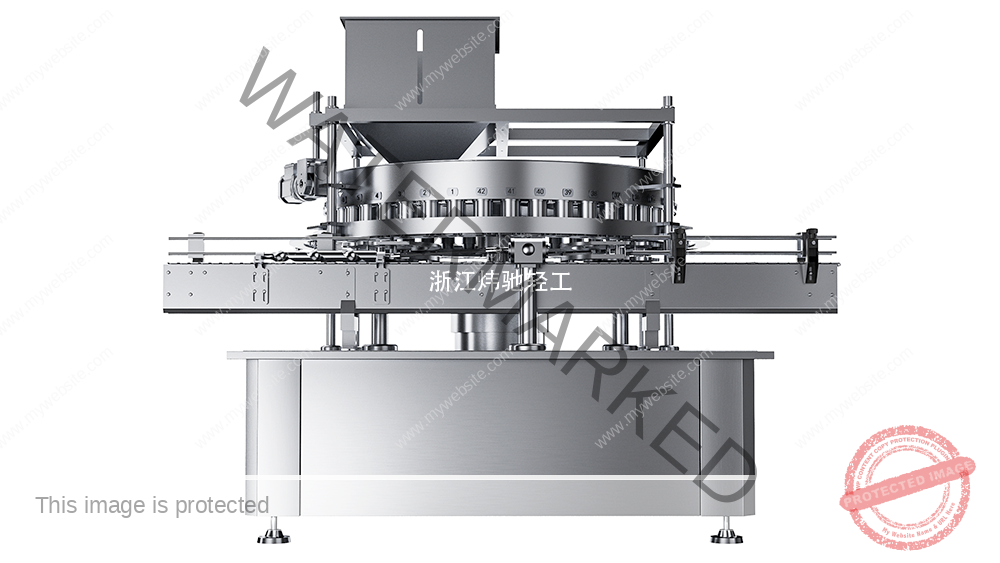
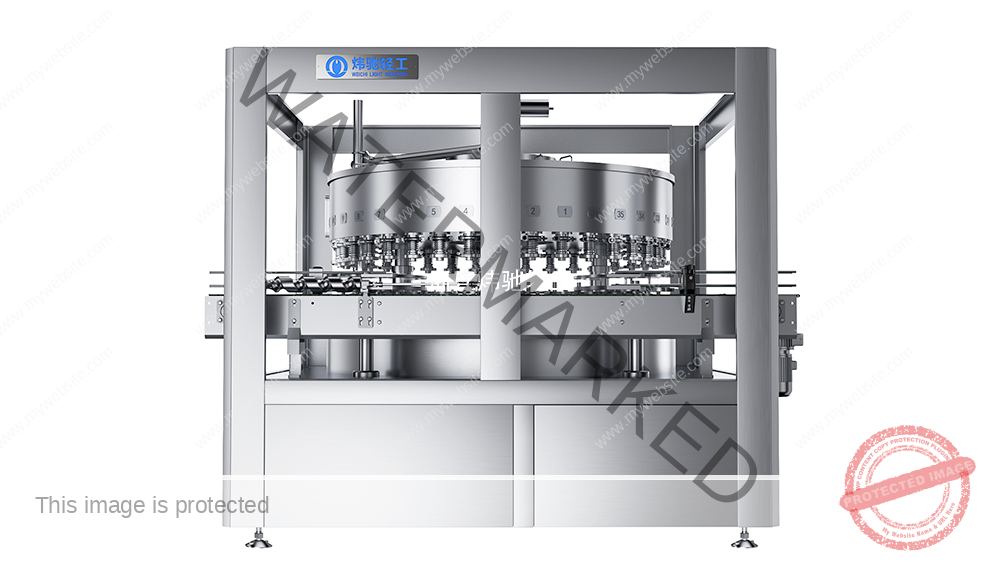
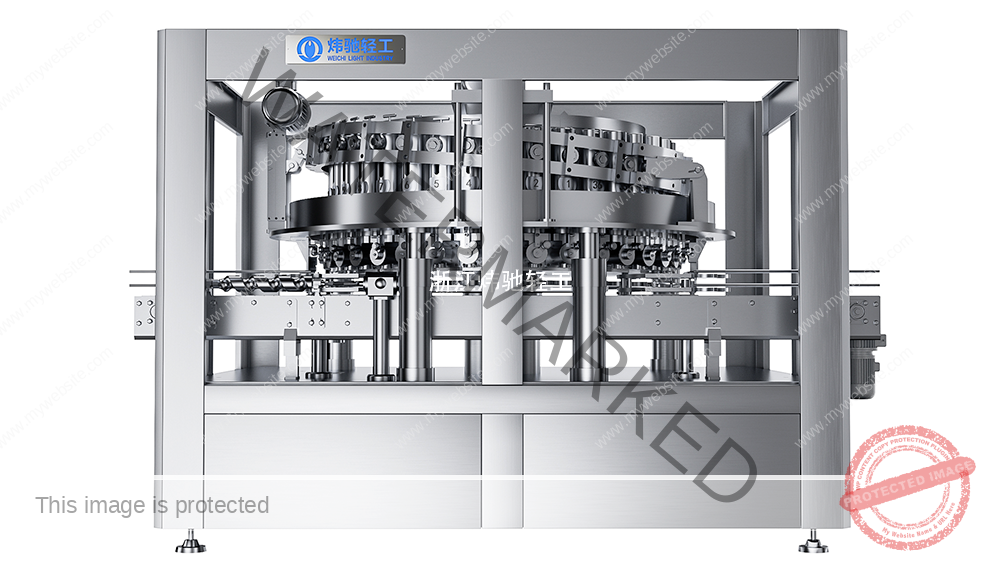
Close-up view of the internal mechanical components of a Weichi rotary can seamer.
How a Can Seamer Creates a Double Seam
Although machine motion varies by design, the closure sequence can be understood in six stages.
1. Can and end presentation
The filled or empty can reaches the seaming section in the required orientation. A compatible end is separated from the end stack and positioned above the can. Handling must protect the body flange and end curl because dents, distortion, contamination, or incorrect placement can prevent proper interlocking.
2. Lifting, centering, and chuck contact
The lifter or base plate supports the can and brings the can-and-end assembly against the seaming chuck. Stable centering and sufficient controlled support are essential. If the assembly slips, tilts, or is not correctly seated, the seam may vary around its circumference or become incomplete.
3. First-operation forming
The first-operation roll approaches the rotating closure and progressively folds the end curl under the can-body flange. This forms the initial cover hook and body hook relationship. The first operation establishes material distribution for the final seam and strongly influences hook lengths, overlap, countersink relationship, and wrinkle development.
This stage is not simply a rough preliminary squeeze. If the first-operation shape is wrong, adding more second-operation pressure does not reliably correct it. Setup review should therefore include the first-operation seam after format changes, tooling replacement, maintenance, or unexplained seam variation.
4. Second-operation finishing
After the initial interlock has formed, the second-operation roll compresses and finishes the layers. It tightens the hooks, brings wrinkles toward the accepted condition, and compresses sealing compound within the designed areas. The goal is the approved finished geometry—not the maximum force or the smallest possible seam.
5. Release and discharge
The rolls retract, the closed can is released from the chuck and lifter, and the machine transfers it to the downstream process. On a multi-head machine, head or station identity should be preserved where the quality system requires traceability. A trend isolated to one head can point toward local tooling, bearing, alignment, lift, or maintenance conditions.
6. Verification
Production samples are inspected by the methods and frequency defined in the approved quality plan. External visual examination, dimensional measurement, destructive teardown, cross-section or optical examination, and supplemental leak or pressure tests provide different kinds of evidence. No single test automatically identifies every defect.
Double Seam Quality Parameters
Double-seam control combines observed condition with measured geometry. The applicable parameters, sampling positions, limits, and calculation methods must come from the approved component and process specification; generic online values should not be copied into a production standard.
| Parameter or check | What it helps evaluate | Interpretation boundary |
|---|---|---|
| Seam width or length | Overall finished-seam geometry | Target varies with the can, end, material, and tooling system |
| Seam thickness | Compression and total layer condition | Must be assessed with other measurements; one thickness value cannot prove integrity |
| Countersink | End position and relationship to chuck-supported geometry | Measurement technique and reference points must follow the approved method |
| Body hook and cover hook | Formation of the two interlocked hooks | Hook values alone do not replace overlap and tightness assessment |
| Overlap-related characteristics | Degree of mechanical interlock inside the seam | Required value and calculation method are container-specific |
| Tightness and wrinkle condition | How the formed layers were compressed and finished | Excessive tightness is not automatically better |
| Pressure ridge and compound distribution | Additional evidence of formation and sealing condition | Use only the definitions and acceptance rules in the control plan |
| External visual condition | Circumferential defects, damage, contamination, or leakage evidence | Appearance alone cannot confirm internal hook geometry |
Inspection records should identify the product, time, can and end lots, machine, and seaming head or station where applicable. They should also record measurements, visual findings, disposition, corrective action, and recheck results. Leak, pressure, or vacuum testing can supplement geometry checks, but it should not replace teardown or cross-section inspection unless a validated quality plan specifically permits that approach.
Why Double Seam Quality Is Critical for Beverage Cans
Rotary Can Seamer Working Principle
A rotary can seamer moves containers through a rotating turret or carousel rather than stopping every can at one fixed closing position. Multiple seaming heads may be arranged around the turret. As a can enters, transfer components coordinate it with an end, a lifter or base plate, and a seaming chuck. The can then travels with its assigned head while first- and second-operation roll actions occur in sequence.
The rotary arrangement allows handling, forming, finishing, and discharge to overlap across different heads. Output therefore depends on the complete configuration: number of active heads, turret speed, can-and-end format, product and fill condition, transfer stability, inspection requirements, and the acceptance criteria used during the rating. A head count or headline speed by itself is not enough to define real production capability.
Consistency between heads is a central control issue. If measurements from one station drift while the others remain stable, the investigation may focus on that station's chuck, rolls, bearings, alignment, lift condition, setup, or maintenance history. Head-level sample identification makes this comparison possible.
Can Seamer Troubleshooting: Common Problems and Inspection Direction
A defect name describes an observed condition; it does not prove one root cause. Before adjustment, the potentially affected production interval should be contained under the site's quality procedure. Components and specifications should be confirmed, the defect measured, and the relevant machine conditions inspected.
| Problem | Typical observation | Investigation focus |
|---|---|---|
| False seam | Body flange and end hook fail to interlock over part of the circumference | Damaged flange or curl, end placement, misalignment, or foreign material |
| Insufficient overlap | Hooks do not meet the approved overlap requirement | First-operation formation, component dimensions, tooling, lift, or damage |
| Loose seam | Finished joint is not compressed to the accepted condition | Second-operation setup, tooling wear, lift condition, contamination, or wrong tooling |
| Droop, vee, or lip | Local projection extends below the normal seam profile | First-operation condition, damaged components, contamination, compound, or wear |
| Cutover or fractured seam | Metal is sharply weakened, cut, or fractured near the seam radius | Excessive compression, mismatched or worn tooling, damaged material, or foreign matter |
| Spinner or incomplete seam | Circumference is formed unevenly because the assembly slips or the action is incomplete | Chuck grip, lift, contamination, wear, drive, or roll action |
| Variation by head or station | One position trends differently from the other positions | Local chuck, roll, bearing, alignment, lift, setup, or maintenance condition |
A safe troubleshooting sequence is to contain affected output, confirm the approved can/end/tooling specification, inspect components and the seaming area, measure the finished seam, review the first operation when authorized, and check the relevant chuck, rolls, lifter, transfer, and alignment conditions. Qualified personnel should change only one authorized variable at a time, produce new samples, repeat the required checks, document the result, and release output only through the approved quality process.
How to Choose a Can Seamer
Selection should begin with the application, not with a speed number. A technically useful request for quotation or design review normally includes the following information:
- Controlled can-body and end drawings, including materials, dimensions, flange, curl, and compound details.
- Beverage type, fill temperature, carbonation or other pressure conditions, foam behavior, headspace requirements, and any relevant contamination or cleaning risk.
- Normal and peak output requirements, shift pattern, expected efficiency basis, test duration, and acceptance criteria.
- Upstream filler, end-handling, conveying, and control interfaces.
- Downstream inspection, rejection, conveying, coding, packing, and accumulation requirements.
- Number of formats, changeover frequency, required change parts, tooling control, and setup verification method.
- Available floor space, access, utilities, cleaning approach, lubrication plan, environmental conditions, and safety requirements.
- Seam inspection methods, sample traceability, head-level monitoring needs, spare-parts scope, training, documentation, and factory or site acceptance tests.
Do not assume that two cans with the same nominal diameter can use the same tooling or settings. Compatibility must be evaluated from the complete can-and-end system. Likewise, compare proposed production rates only when the configuration, container, product condition, operating window, and acceptance basis are stated.
The best machine is not necessarily the one with the largest advertised output. It is the configuration that can repeatedly produce the approved seam on the required formats, integrate with the line, support controlled changeovers and inspection, and meet the agreed acceptance conditions.
FAQ
1. What is a can seamer?
A can seamer is a machine that attaches a can end to a can body by forming a double seam. It supports the can and end against a chuck and uses first- and second-operation rolls to form and finish the joint.
2. What is a double seam?
A double seam is the mechanical interlock formed from the can-body flange and the end curl. The finished joint includes a body hook and a cover, or end, hook whose overlap, compression, geometry, and compound condition contribute to closure integrity.
3. Why are two seaming operations necessary?
The first operation forms the initial hook relationship and distributes the metal. The second operation compresses and finishes the already formed layers. Separating these actions reduces the risk of trying to form and fully tighten the joint in one step.
4. Why is the first operation so important?
It establishes the hook formation, overlap potential, and material distribution needed by the final seam. A malformed first operation generally cannot be repaired simply by increasing second-operation compression.
5. Which double-seam characteristics are commonly inspected?
Depending on the approved plan, checks may include seam width, thickness, countersink, body hook, cover hook, overlap-related characteristics, tightness or wrinkle condition, pressure ridge, compound distribution, external defects, and supplemental integrity tests.
6. How often should seams be inspected?
The applicable quality plan sets the frequency. Inspection may be associated with startup, routine production intervals, material or format changes, tooling changes, maintenance, adjustments, and abnormal events. A universal schedule should not be copied from another line.
7. Does a leak test replace seam teardown?
Not automatically. A leak or pressure test can provide useful supplemental evidence, but it may not reveal every geometric defect or explain its cause. Use the combination of tests required by the validated control plan.
8. Can one seamer run multiple can sizes?
Some machines can be converted for multiple approved formats with the correct tooling, change parts, and controlled setup. Capability depends on the exact machine, can, and end specifications; nominal diameter alone is not enough.
9. How should an out-of-specification seam be inspected and adjusted?
First contain potentially affected output, confirm specifications, measure the condition, and determine whether the issue relates to components, handling, the first operation, the second operation, or another machine condition. Qualified personnel should follow the manual, change one authorized variable at a time, and verify new samples before release.
10. What information is needed before selecting a beverage can seamer?
Provide controlled can and end drawings, product and fill conditions, normal and peak output, line interfaces, inspection requirements, changeovers, utilities, space, cleaning and safety needs, and acceptance-test criteria. This creates a comparable technical basis for machine selection.
About Weichi
Weichi provides can seaming equipment for beverage and food can production. If you are evaluating an automatic can seaming machine, prepare the confirmed can and end drawings, product conditions, required output, line interfaces, and inspection requirements. Send those application details for a configuration review.
Technical Basis and Project Evidence
Final equipment selection and acceptance must use the project product, can and end drawings, utility conditions, line interfaces, agreed test duration, and documented FAT/SAT criteria. Can and end supplier specifications remain authoritative for double-seam limits.
- U.S. FDA: Low-Acid Canned Food Manufacturers, Part 3 — Containers and Closures
- SAMR record: GB/T 30639-2014 — Sauce filling and seaming equipment
- SAMR record: GB/T 40360-2021 — Still-beverage can filling and seaming equipment
Review equipment families See project references Submit application data