
Key Takeaways
- Prepared by Zhejiang Weichi · September 17, 2026. Procurement guidance based on the public technical sources linked below. Project cleaning procedures and release criteria require approval b…
- Specify three separate deliverables: a defined cleaning circuit, a traceable cycle record and evidence that the cleaning procedure achieves the agreed result. A pump running or a clear retur…
- This guide helps buyers turn a general “CIP included” statement into a circuit–checkpoint–record matrix. It complements the machine FAT and SAT checklist; it does not prescribe a universal c…
Prepared by Zhejiang Weichi · September 17, 2026. Procurement guidance based on the public technical sources linked below. Project cleaning procedures and release criteria require approval by the responsible equipment, chemical and food-quality specialists.
Specify three separate deliverables: a defined cleaning circuit, a traceable cycle record and evidence that the cleaning procedure achieves the agreed result. A pump running or a clear return stream can demonstrate a function; neither establishes that every product-contact surface has been cleaned adequately.
This guide helps buyers turn a general “CIP included” statement into a circuit–checkpoint–record matrix. It complements the machine FAT and SAT checklist; it does not prescribe a universal cleaning recipe.
1. Define exactly what the CIP option covers
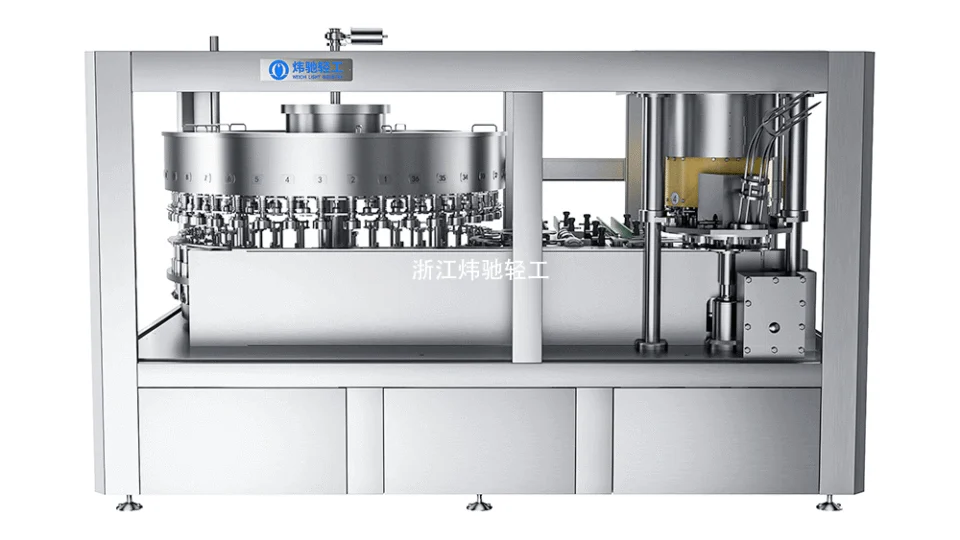
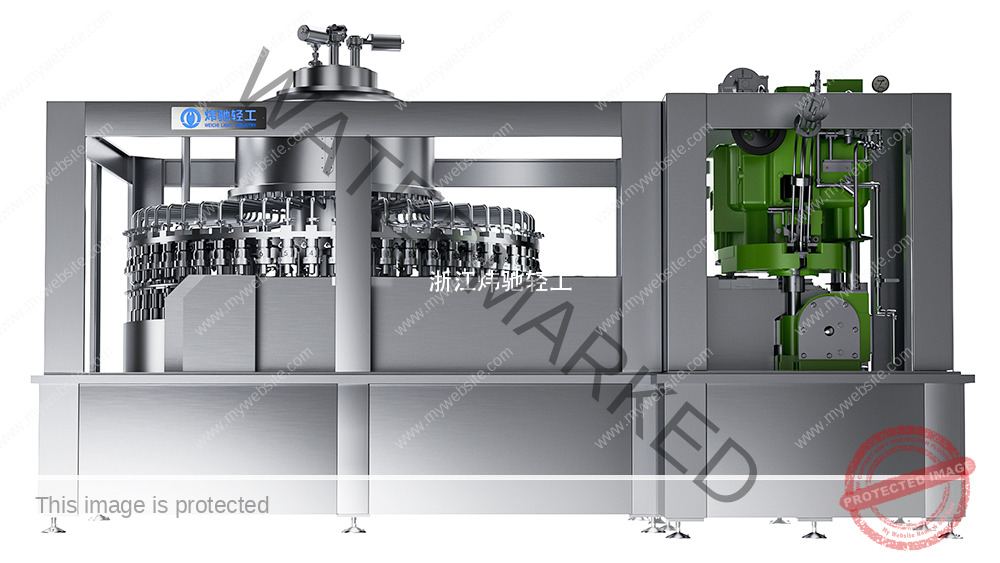
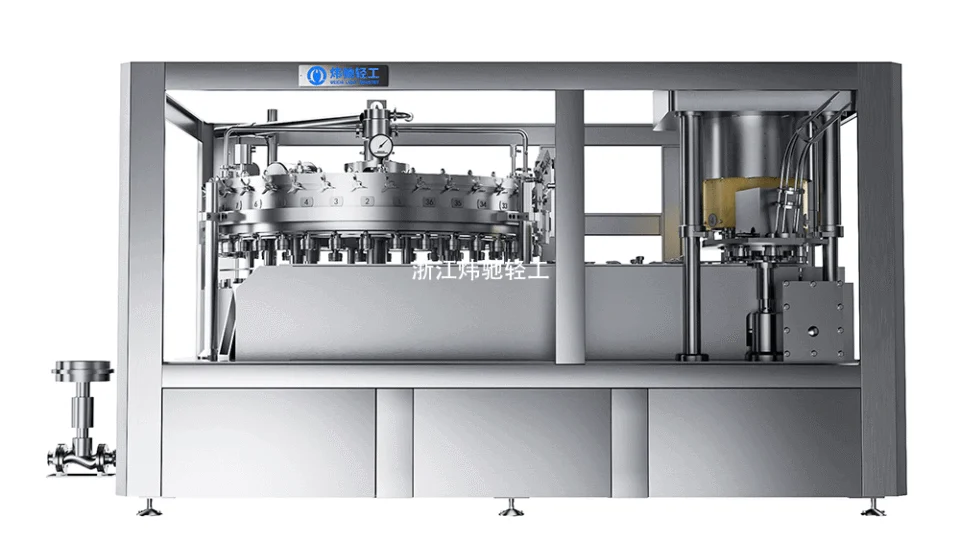
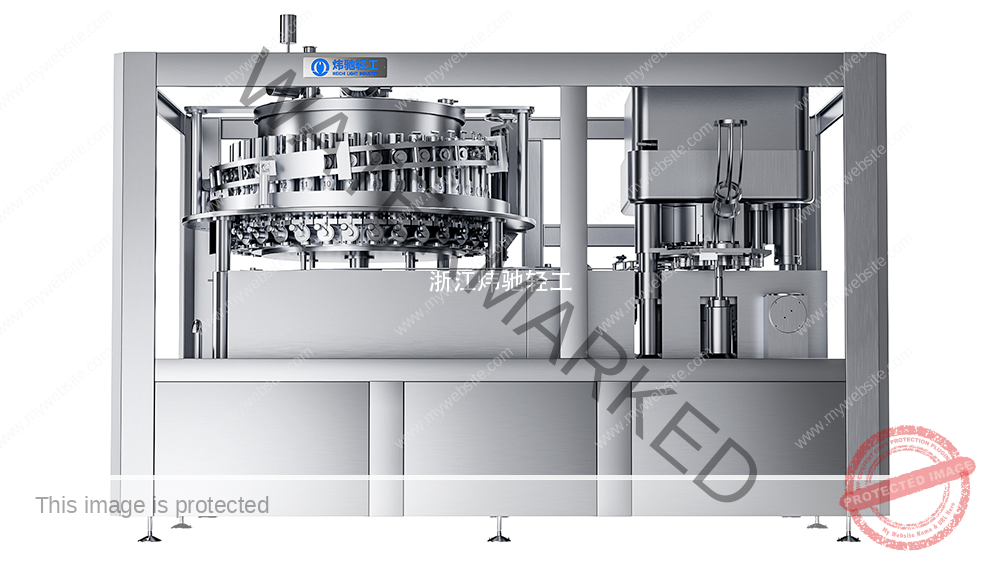
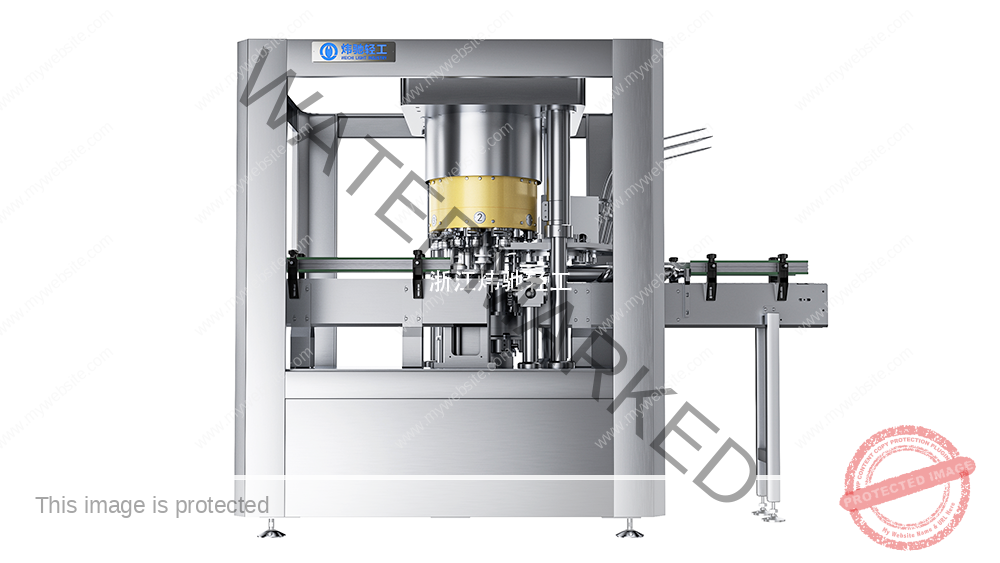
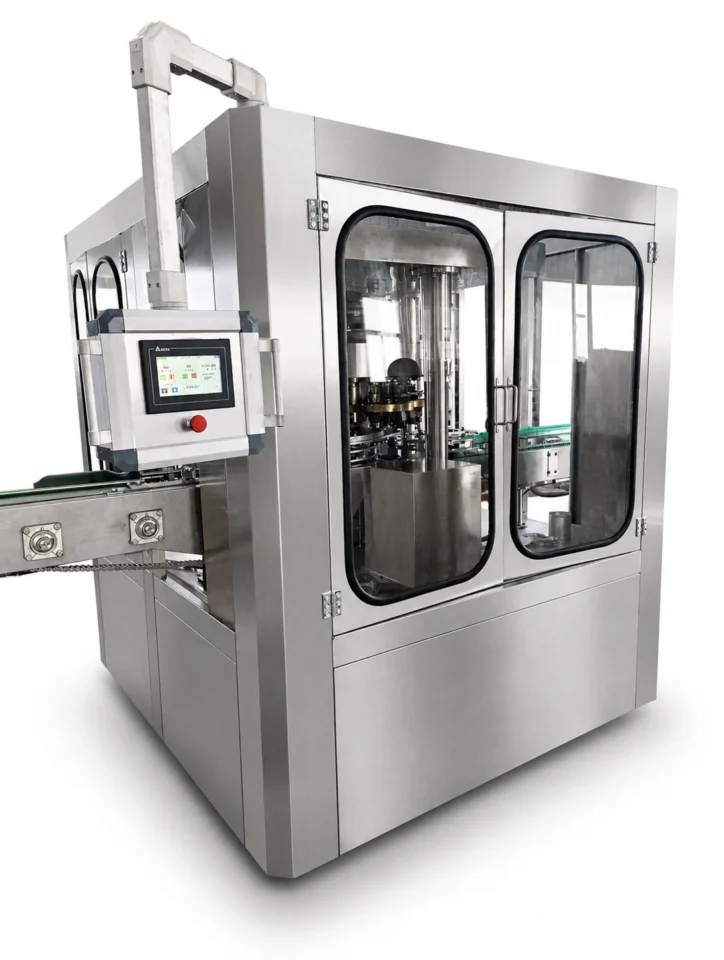
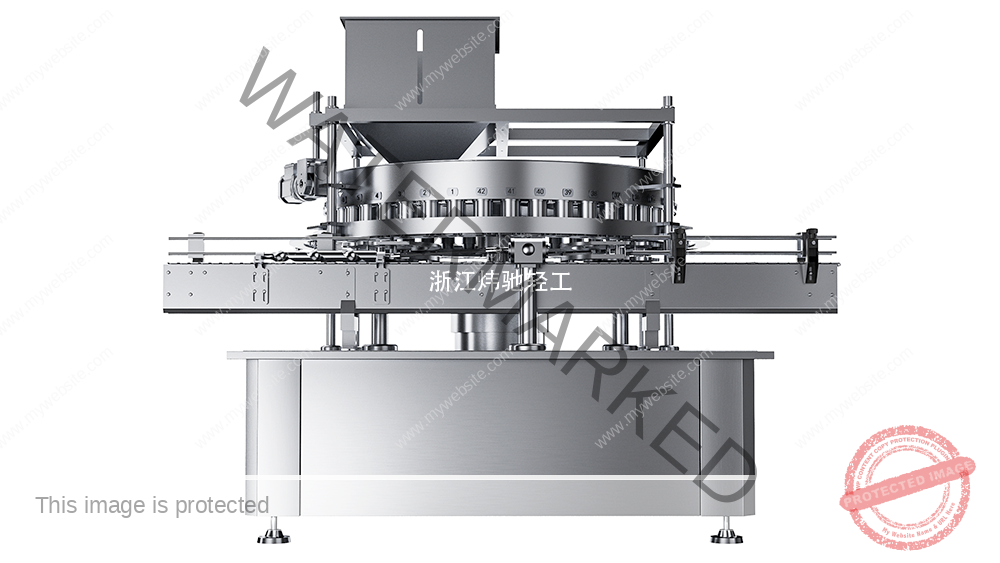
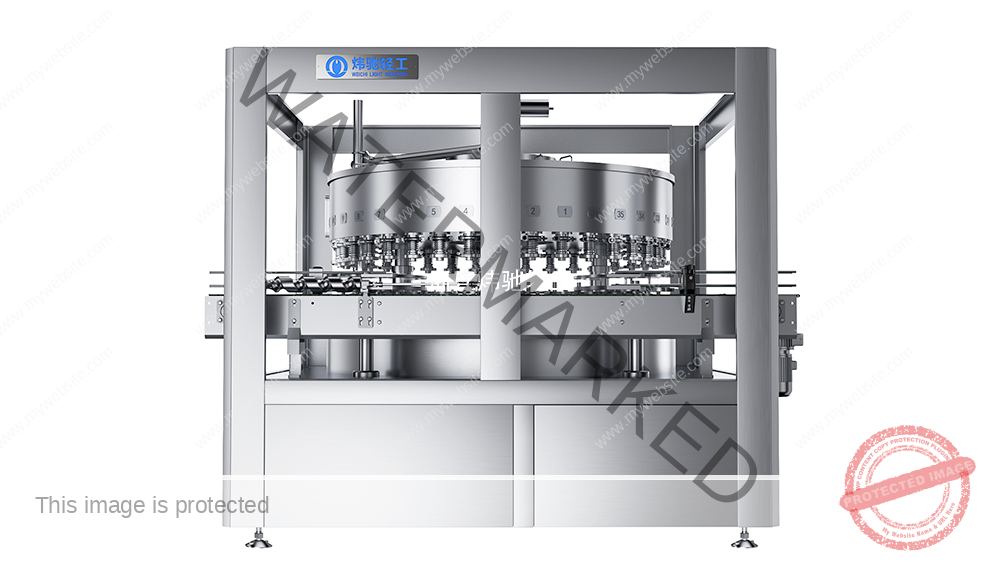
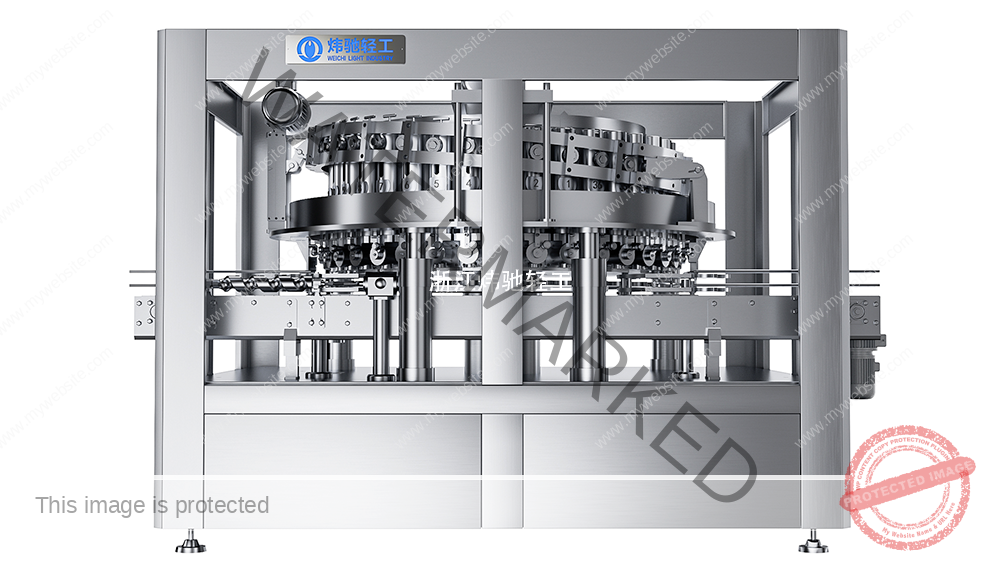
The current Weichi still beverage filler-seamer product page lists automatic CIP for filling valves as an optional upgrade. That is a starting point for configuration review, not evidence that every machine surface or every product is covered by one cleaning cycle.
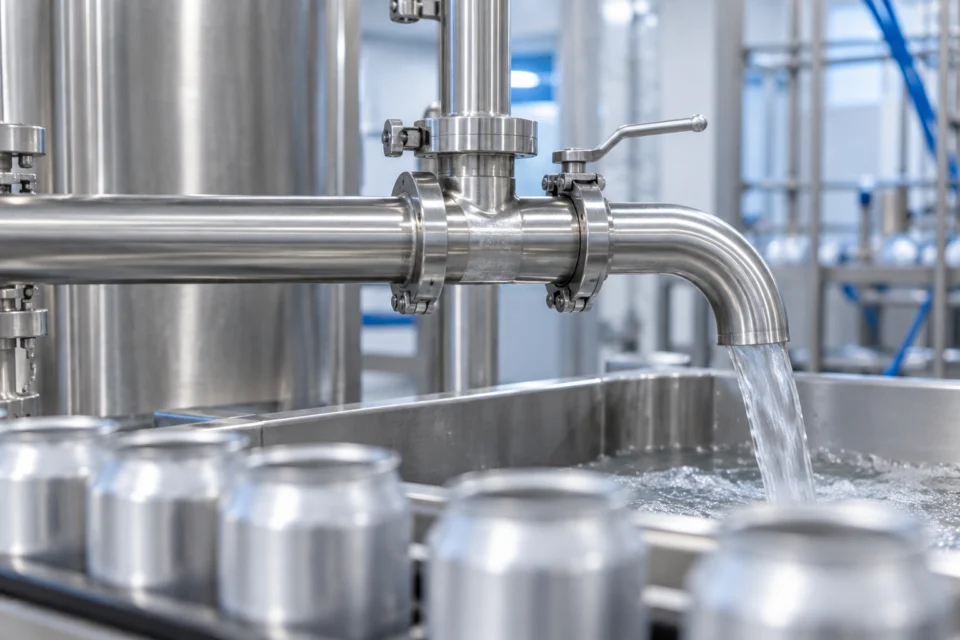
Ask the supplier to mark the actual product path and cleaning boundary on the project drawing: product inlet, tank, valves, nozzles, connecting pipes and return or drain points. Identify components requiring removal, manual cleaning or separate cleaning out of place (COP). External foam cleaning and the seamer area need their own defined scope.
For a viscous product or particulate sauce, confirm the appropriate filling method first using the piston filler selection guide. Cleaning access must then be checked against the selected product path and actual supplied parts.
2. Keep three evidence layers separate
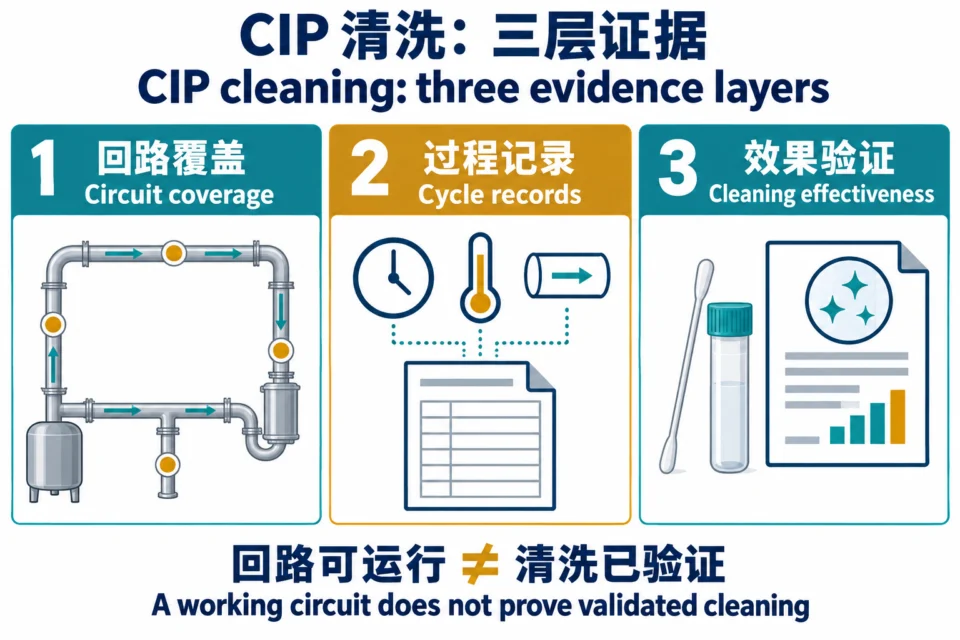
- Circuit coverage: which surfaces and branches are included, and which are excluded?
- Cycle records: did the identified circuit follow its approved sequence and operating conditions?
- Cleaning effectiveness: does the approved procedure repeatedly meet the product-specific acceptance criteria?
EHEDG distinguishes validation of a procedure from monitoring during its use and verification of implementation. Its Guideline 45 public scope describes site-specific programmes; the public EHEDG cleaning-validation interview explains the distinction. Apply that separation to the purchase specification.
3. Build a circuit–checkpoint–record matrix
The rows below are a buyer's template, not a statement that these features are fitted to every model. Replace each description with drawing tags, instrument IDs, agreed limits and named responsibilities before testing.
| Scope to identify | Question to resolve | Record to request |
|---|---|---|
| Product inlet and supply boundary | Who supplies cleaning media, and where does the machine supplier's responsibility begin? | Marked boundary drawing; utility conditions; connection and responsibility list. |
| Tank, branches and filling stations | How does the approved cleaning route reach each included surface? Which parts need a separate procedure? | Circuit drawing and valve sequence; inspection-point list; CIP/COP/manual-cleaning split. |
| Return path and drains | Where are return conditions observed, and how is drainage checked in the installed arrangement? | Measurement locations; actual traces; drainage observations and unresolved items. |
| Product-contact materials and seals | Are the intended product and cleaning conditions compatible with the supplied materials? | Part/material list; chemical supplier recommendations; approved operating limits. |
| Cycle control and interruptions | What identifies a completed cycle, an alarm, an interrupted cycle and a permitted restart? | Recipe revision; timestamped log or agreed manual record; deviation and recovery record. |
| Cleaning result and release | What is sampled, by which method, against which criterion, and who can release the equipment? | Approved protocol; traceable results; repeat evidence; deviations and approval. |
4. Agree measurement locations before numbers
Tetra Pak's Dairy Processing Handbook, cleaning chapter identifies detergent concentration, temperature, mechanical action and time as interacting cleaning variables, and calls for monitoring and recording critical CIP parameters. Its dairy examples are not acceptance values for every canned beverage or sauce.
In the project record, pair each approved limit with a measurement location and method. Distinguish the supply-tank reading from the condition at the agreed return point. State when effective cleaning time starts, how an excursion is handled and whether a reading is a setpoint or a measured value. If conductivity is used to infer concentration, agree the relevant chemical-specific relationship and temperature treatment.
5. Specify the cleaning-result test independently
Describe the product, prior production condition, delay before cleaning, circuit configuration and cleaning-procedure revision. Agree challenging but relevant conditions with the responsible specialists; a convenient demonstration condition may not represent the intended duty.
The sampling plan should identify locations, method suitability, acceptance limits, repeat requirements and approval responsibility. Visual inspection, surface sampling and rinse sampling answer different questions. Select methods for the actual residue or hazard rather than treating one convenient instrument as a universal test.
In its public cleaning-validation questions and answers, EHEDG cautions that ATP testing has limitations for general soiling and low-level microbial contamination. A satisfactory ATP reading should therefore not be presented as proof of every microbiological or allergen requirement.
6. Divide factory checks from site validation
At FAT: compare the supplied configuration with the agreed matrix; demonstrate accessible functions, the cleaning sequence and the specified records. Identify tests that use substitute media and every requirement deferred to the site.
At the installed site: review changes to pipes, utilities, drainage and operating conditions, then complete the approved product-dependent cleaning work. Keep equipment shipment acceptance separate from hygiene or product-release approval. A successful cleaning demonstration does not establish a thermal process, aseptic operation or shelf life.
Use distinct outcomes: passed, failed, not tested and not applicable. Each open item needs an owner, evidence reference and closure condition. A blank test field is not a pass.
Questions to settle before ordering
Does “automatic CIP” mean no parts ever need removal?
No. Obtain the model-specific cleaning split and access instructions. An automatic internal valve-cleaning option does not define every external or separately cleaned component.
Can one successful cycle validate all recipes?
Only the approved programme can define which conditions are represented. Record the rationale for product grouping, repeat requirements and the changes that trigger review or revalidation.
What should a supplier quotation include?
Request the equipment cleaning scope, exclusions, supplied accessories, interface responsibilities, measurement and recording functions, documentation, FAT checks and site-dependent validation tasks.
Send a cleaning scope with your application enquiry
Start with the still beverage filler-seamer configuration, then send the product list, intended changeovers, existing CIP supply conditions, proposed cleaning boundary and required records through Weichi's application enquiry page. The useful next step is an agreed equipment scope and evidence plan for the actual application.
Technical Basis and Project Evidence
Final equipment selection and acceptance must use the project product, can and end drawings, utility conditions, line interfaces, agreed test duration, and documented FAT/SAT criteria. Can and end supplier specifications remain authoritative for double-seam limits.
- U.S. FDA: Low-Acid Canned Food Manufacturers, Part 3 — Containers and Closures
- SAMR record: GB/T 30639-2014 — Sauce filling and seaming equipment
- SAMR record: GB/T 40360-2021 — Still-beverage can filling and seaming equipment
Review equipment families See project references Submit application data