
Key Takeaways
- Choosing a granule filling machine for cans starts with a representative product trial. Check whether the material feeds consistently, reaches the agreed net mass and retains its required pa…
- This guide concerns granular solids dosed into cans. Products suspended in sauce or liquid need a separate process assessment. The method below is a planning framework: sampling quantities,…
- Identify the product, lot, particle-size range, shape, surface condition, moisture condition and storage history. Include representative fines and larger pieces rather than sending only a ha…

Choosing a granule filling machine for cans starts with a representative product trial. Check whether the material feeds consistently, reaches the agreed net mass and retains its required particle integrity. A product name or a single bulk-density value cannot establish all three.
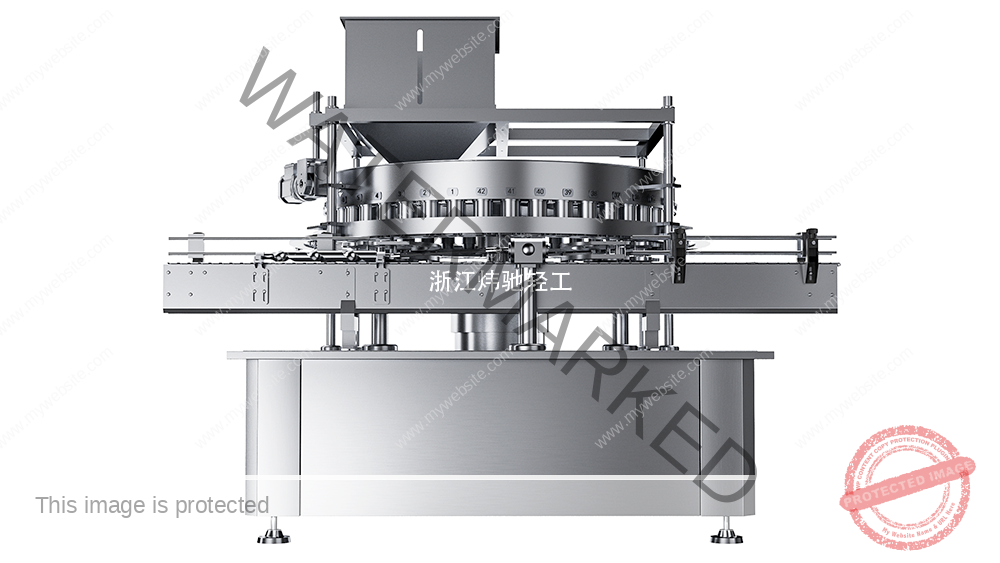
Cover: AI-generated concept of sample preparation; not a customer photograph, a machine configuration or a completed trial.
This guide concerns granular solids dosed into cans. Products suspended in sauce or liquid need a separate process assessment. The method below is a planning framework: sampling quantities, test duration and acceptance limits must be agreed for the actual product, can and proposed equipment.
1. Define the sample before discussing the filler
Identify the product, lot, particle-size range, shape, surface condition, moisture condition and storage history. Include representative fines and larger pieces rather than sending only a hand-selected sample. Keep a sealed reference sample and record any conditioning before testing. Where commercial batches vary, agree which batches or conditions the trial must represent.
Provide the can drawing and actual cans, target net mass, permitted fill level or headspace, required output and downstream seaming arrangement. If an ingredient can pick up moisture or change after storage, explain the normal handling time and environment. A trial with freshly opened material does not automatically cover material held in a hopper during a production pause.
2. Use bulk density to understand mass and volume
Bulk density relates sample mass to the volume occupied by the particles and the spaces between them. Record the container volume, filling and leveling method, whether the sample was settled or tapped, and the sample condition. Compare batches using the same method. A loose-fill value and a deliberately settled value describe different preparation conditions.
For a fixed-volume dose, the planning relation is mass ≈ bulk density × occupied dose volume. It explains why a density change can alter mass even when the nominal volume setting is unchanged. It does not prove the performance of a proposed filler: actual filling of the dosing space, feed interruptions and the installed dosing principle must also be checked. A machine that controls mass still needs reliable feeding.
Compare individual filled-can net masses at defined operating points. Subtract the applicable container tare using an agreed method and a suitable checked balance. Keep the individual results, their spread and underweight or overweight observations; an average alone can hide intermittent missing or excessive doses.
3. Investigate bridging as a feeding problem
When flow stops while material remains in the hopper, record where the interruption occurs. A stable arch above an outlet, a preferential channel with stagnant material around it, and a downstream obstruction require different investigations. Record the observed condition before calling every interruption “bridging.” Use guarded observation methods; stop and isolate equipment before physical inspection.
Observe the proposed feeding path at the agreed high and low hopper levels, during replenishment, and after a representative pause and restart. Log feed interruptions alongside individual can masses. A good short run at one hopper level cannot establish reliable flow through the full operating cycle.
Bulk density alone cannot determine a safe outlet size or hopper angle. Jenike & Johanson describes flow-property testing under representative operating conditions, including cohesive strength, internal and wall friction, and compressibility, for hopper design and bridging assessment. For a material with unresolved flow risk, agree suitable specialist tests and an equipment trial; do not substitute an assumed universal geometry.

4. Measure breakage against the incoming baseline
Define “broken” before testing: for example, an agreed size cut or a documented visual defect category appropriate to the product. Decide whether the result is a mass fraction or a particle-count fraction. Use the same sampling and classification method before and after the filling path; those two denominators are not interchangeable.
Take representative samples from the incoming material and the filled cans. Where practical, add intermediate sampling points to separate damage from conveying, feeding, dosing and the final drop. Record fines already present in the incoming sample. A high final fines level does not, on its own, show how much the filler created.
Review actual drop heights, contact points, restrictions and the proposed feed assistance with the supplier. Vibration or agitation may change both flow and particle integrity, so evaluate the approved settings together. Keep baseline settings and retest after a controlled change rather than assuming that stronger agitation always improves the result.
5. Turn the trial into an acceptance record
| Trial condition | Record together | Decision supported |
|---|---|---|
| Representative batch and sample preparation | Lot, particle distribution, density method, baseline fines | Which incoming material the result covers |
| Agreed operating rate and hopper levels | Settings, individual net masses, fill level, interruptions | Dosing consistency while feed conditions change |
| Replenishment and pause/restart | Pause duration, material condition, recovery behavior, affected cans | Whether normal interventions disturb feeding or dose mass |
| Particle-integrity comparison | Matching before/after samples, classification method, retained photographs | Whether breakage meets the agreed product requirement |
| Connected-line check | Transfer behavior, product on the rim, downstream handling and seaming checks | Whether the proposed filling result is compatible with the next operation |
Agree the sample quantity, run duration, allowable mass variation, interruption criteria and breakage limit before the FAT or application trial. Record the machine configuration and settings with the result. A pass applies to those tested conditions; changes in material, can format or feed arrangement require a review of what must be repeated.
6. Prepare a useful enquiry
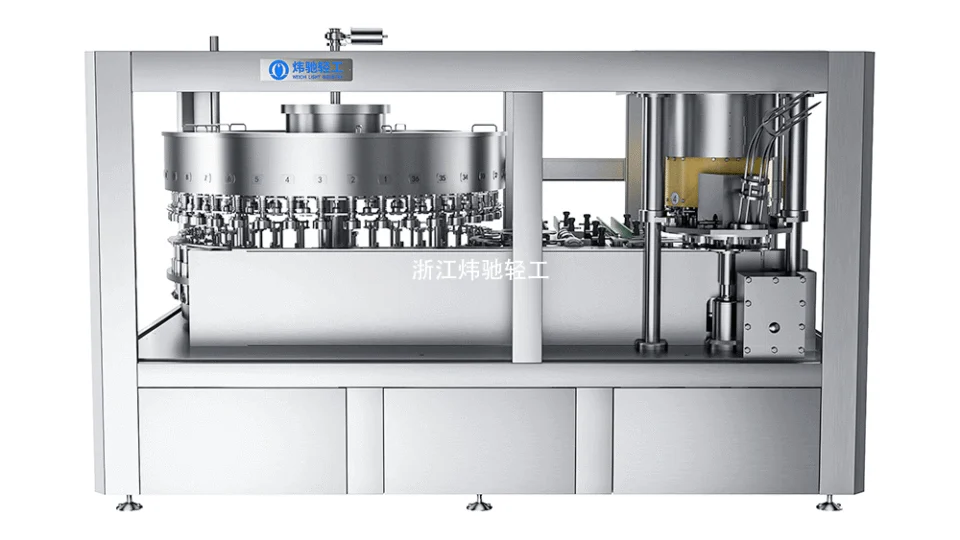
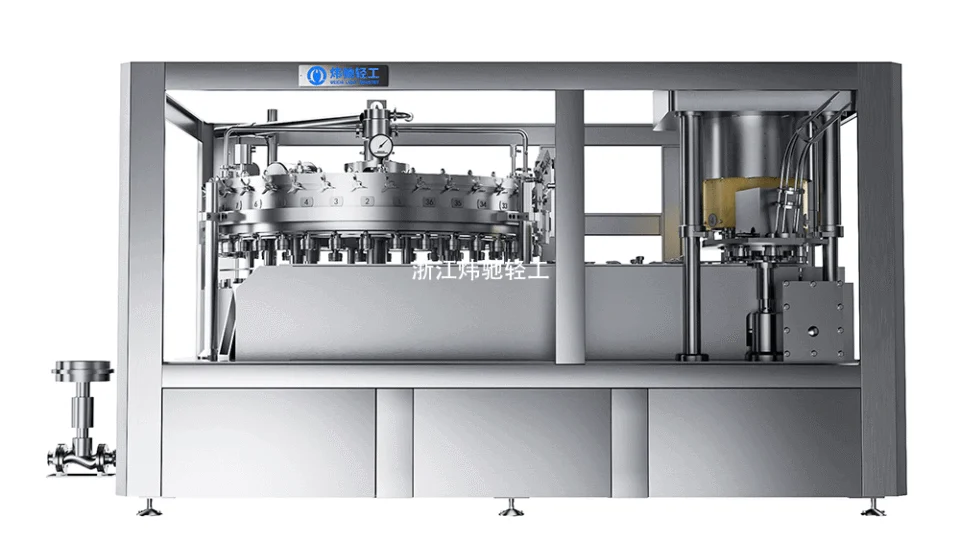
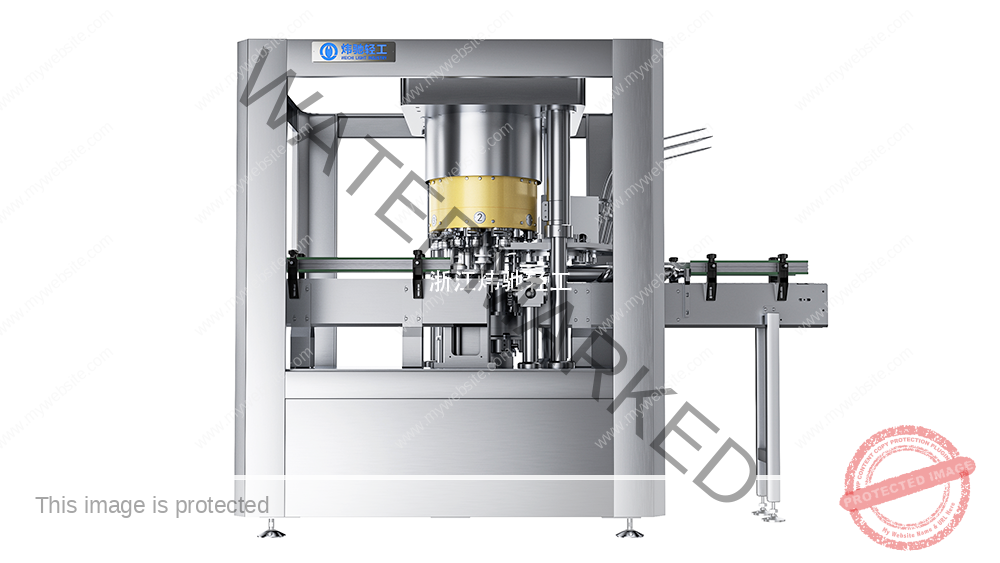
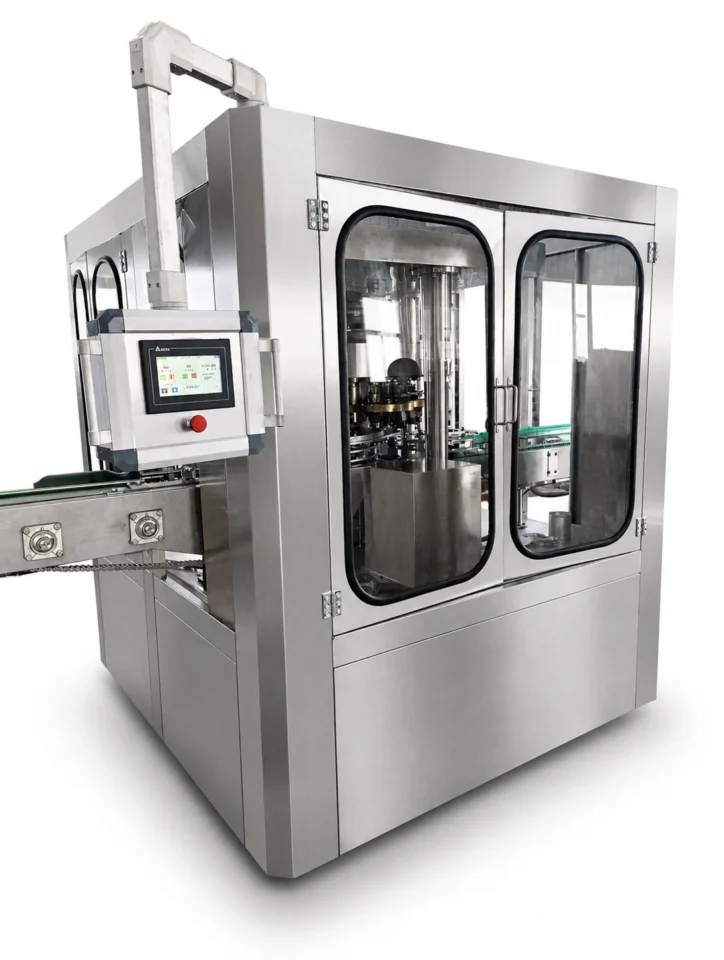
Zhejiang Weichi’s granule filling machine product page identifies a quantitative filling equipment category. It is a starting point for an application review, not proof that every granular product is suitable. Confirm the proposed dosing principle, product-contact path, cleaning access and can interface against representative samples.
Send the sample specification, actual cans, target mass, required rate and the trial matrix through the project enquiry page. Where a separate automatic can seaming machine is proposed, include the transfer and closure requirements in the same review. The filler trial does not by itself approve the final seam or the packaged product’s preservation process.
Questions about granule filling into cans
Can one bulk-density value select the machine?
It helps relate mass to occupied volume, but feeding behavior, particle integrity, the dosing principle and the can interface still need evaluation. Record the measurement method and expected batch variation.
Does stable average weight prove reliable filling?
No. Review individual net masses and their variation alongside interruption and restart records. Alternating low and high doses can produce an acceptable-looking average.
Does a successful trial cover every future batch?
Only within the agreed material and operating range. Retain the sample identity, settings and results so that a changed batch can be compared with the conditions actually tested.
Technical Basis and Project Evidence
Final equipment selection and acceptance must use the project product, can and end drawings, utility conditions, line interfaces, agreed test duration, and documented FAT/SAT criteria. Can and end supplier specifications remain authoritative for double-seam limits.
- U.S. FDA: Low-Acid Canned Food Manufacturers, Part 3 — Containers and Closures
- SAMR record: GB/T 30639-2014 — Sauce filling and seaming equipment
- SAMR record: GB/T 40360-2021 — Still-beverage can filling and seaming equipment
Review equipment families See project references Submit application data